
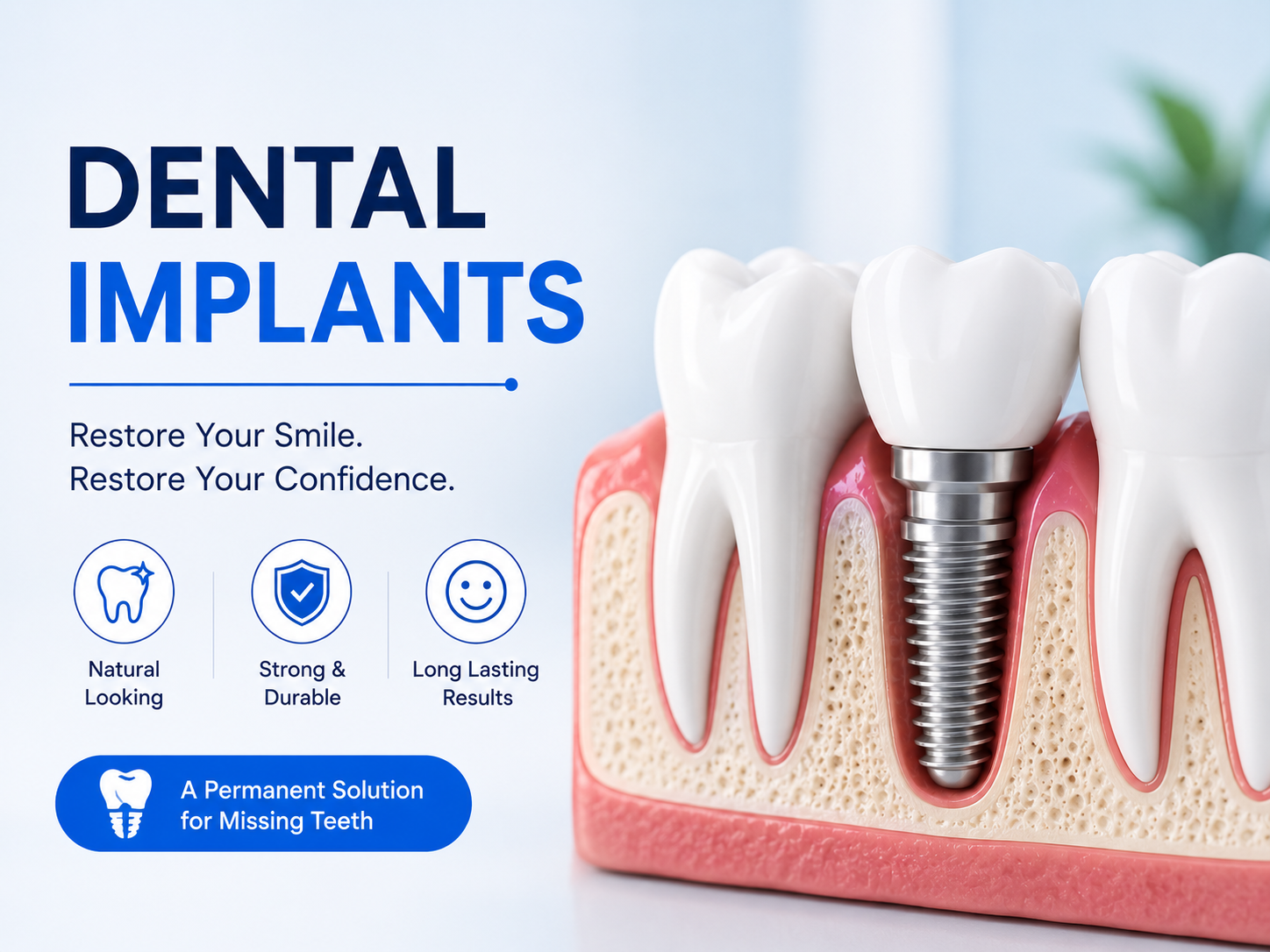
Dental Implants: A Complete Guide to Restoring Your Smile
Missing a Tooth? Dental Implants Offer a Permanent Solution
Missing teeth can affect much more than your appearance. They can make eating difficult, affect your speech, lower your confidence, and even lead to jawbone loss over time. Fortunately, dental implants provide a permanent, natural-looking solution that restores both the function and aesthetics of your smile.
In this guide, we'll explain everything you need to know about dental implants, including their benefits, procedure, cost factors, and aftercare.
What Are Dental Implants?
A dental implant is an artificial tooth root made from medical-grade titanium or zirconia that is surgically placed into the jawbone. Once the implant fuses with the bone through a natural process called osseointegration, a custom-made dental crown is attached to restore the missing tooth.
Unlike removable dentures or traditional bridges, dental implants function just like natural teeth and provide long-term stability.
Who Needs Dental Implants?
Dental implants are recommended for individuals who:
-
Have one or more missing teeth
-
Want a permanent tooth replacement solution
-
Have healthy gums
-
Have sufficient jawbone to support an implant
-
Want improved chewing and speaking ability
-
Are looking for a natural-looking smile restoration
-
Are tired of loose or uncomfortable dentures
Types of Dental Implants
Single Tooth Implant
Ideal for replacing one missing tooth without affecting neighboring teeth.
Multiple Dental Implants
Suitable for replacing several missing teeth using implant-supported bridges.
Full Mouth Dental Implants
A complete restoration option for patients who have lost all teeth in the upper or lower jaw.
All-on-4 Dental Implants
A modern technique that supports a full arch of replacement teeth using only four strategically placed implants.
Implant-Supported Dentures
These dentures are securely attached to implants, offering improved stability, comfort, and chewing efficiency.
Benefits of Dental Implants
Choosing dental implants offers several long-term advantages:
-
Permanent tooth replacement
-
Natural appearance and feel
-
Improved chewing and speech
-
Prevents jawbone deterioration
-
Preserves facial structure
-
Prevents adjacent teeth from shifting
-
No need to remove healthy teeth
-
Highly durable and long-lasting
-
Improved confidence and self-esteem
-
Easy maintenance with regular oral hygiene
Step-by-Step Dental Implant Procedure
1. Consultation and Examination
Your dentist evaluates your oral health using digital X-rays or a CBCT scan to determine if you're a suitable candidate.
2. Treatment Planning
A customized treatment plan is prepared based on your bone quality, missing teeth, and smile goals.
3. Implant Placement
The titanium implant is carefully inserted into the jawbone under local anesthesia.
4. Healing Period
The implant integrates with the jawbone over the next 3–6 months, creating a strong foundation.
5. Abutment Placement
A connector called an abutment is attached to the implant.
6. Crown Placement
A custom-made crown is fixed onto the implant, completing your new smile.
Are Dental Implants Painful?
Most patients are surprised by how comfortable the procedure is. Dental implants are placed under local anesthesia, making the treatment virtually painless. Mild swelling or discomfort after surgery usually subsides within a few days and can be managed with prescribed medications.
How Long Do Dental Implants Last?
With proper oral hygiene and regular dental check-ups, dental implants can last 20 years or more. In many cases, they can last a lifetime.
Maintaining healthy gums and avoiding smoking significantly improves long-term success.
How to Care for Dental Implants
To keep your implants healthy:
-
Brush twice daily using a soft-bristled toothbrush
-
Floss around the implant every day
-
Use an antibacterial mouthwash if recommended
-
Visit your dentist every six months
-
Avoid chewing very hard objects
-
Quit smoking to improve implant longevity
Are You a Good Candidate?
You may be a suitable candidate if you:
-
Have healthy gums
-
Have adequate jawbone
-
Do not have uncontrolled diabetes
-
Do not smoke heavily
-
Maintain good oral hygiene
Even if bone loss is present, procedures such as bone grafting or sinus lift surgery may make implants possible.
Why Choose Our Dental Implant Clinic?
At our clinic, we combine advanced technology with experienced implant specialists to provide safe, comfortable, and long-lasting dental implant treatment.
Our advantages include:
-
Experienced implantologists
-
Digital smile planning
-
3D CBCT imaging
-
International-quality implant systems
-
Painless procedures
-
Strict sterilization protocols
-
Affordable treatment plans
-
Personalized aftercare
Frequently Asked Questions
How much do dental implants cost?
The cost depends on the number of implants, the type of implant system, whether bone grafting is required, and the type of dental crown used.
How successful are dental implants?
Dental implants have a success rate of over 95% when placed by experienced professionals and maintained with proper oral hygiene.
Can seniors get dental implants?
Yes. Age is generally not a barrier. Overall oral health and bone quality are more important than age.
How long is the recovery?
Most patients return to normal daily activities within 24–48 hours. Complete healing and implant integration typically take 3–6 months.
Final Thoughts
Dental implants are one of the most advanced and reliable solutions for replacing missing teeth. They not only restore your smile but also improve oral health, chewing ability, and overall confidence. If you're looking for a permanent alternative to dentures or bridges, dental implants could be the ideal choice.
Book a consultation with our experienced dental team to determine whether dental implants are right for you. A healthier, stronger, and more confident smile begins with expert care.