
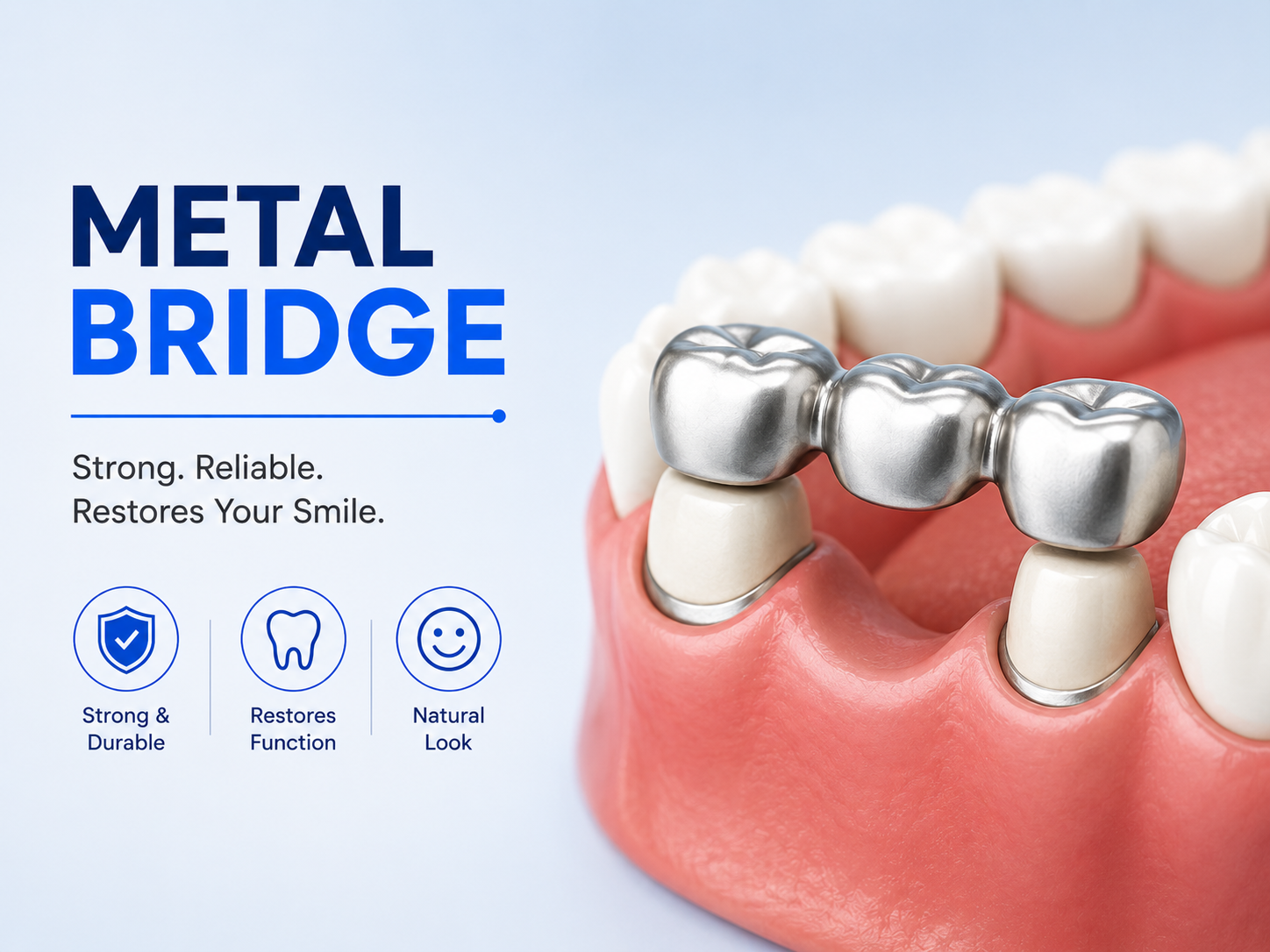
Metal Dental Bridge: A Durable Solution for Replacing Missing Teeth
Restore Your Smile with Strong and Long-Lasting Metal Dental Bridges
Missing teeth can affect your confidence, speech, chewing ability, and overall oral health. If left untreated, the gap created by a missing tooth can cause neighboring teeth to shift, leading to bite problems and additional dental complications. A Metal Dental Bridge is a reliable and cost-effective solution that restores missing teeth while improving both function and appearance.
In this blog, you'll learn everything about metal dental bridges, including their benefits, procedure, types, maintenance, and who is the right candidate for this treatment.
What Is a Metal Dental Bridge?
A Metal Dental Bridge is a fixed dental restoration used to replace one or more missing teeth. It consists of artificial teeth (pontics) supported by metal crowns placed on the natural teeth adjacent to the gap.
Metal bridges are known for their exceptional strength and durability, making them an ideal choice for replacing missing back teeth where chewing forces are highest.
Why Do You Need a Metal Bridge?
When a tooth is lost, it can lead to several oral health issues, including:
-
Difficulty chewing food
-
Problems with speech
-
Shifting of adjacent teeth
-
Bite misalignment
-
Increased risk of gum disease
-
Jaw discomfort
-
Bone loss over time
A metal dental bridge helps restore your smile while preventing these complications.
Types of Metal Dental Bridges
Traditional Metal Bridge
The most common type, supported by crowns placed on the teeth adjacent to the missing tooth.
Metal-Ceramic (PFM) Bridge
Also known as a Porcelain-Fused-to-Metal bridge, it combines the strength of metal with the natural appearance of porcelain.
Implant-Supported Bridge
Instead of relying on natural teeth, the bridge is supported by dental implants, providing excellent stability for multiple missing teeth.
Cantilever Metal Bridge
Used when only one adjacent tooth is available to support the bridge. This option is recommended only in specific clinical situations.
Benefits of Metal Dental Bridges
Metal bridges remain one of the most dependable restorative options because they offer:
-
Excellent strength and durability
-
Long-lasting performance
-
Strong chewing capability
-
Stable fixed restoration
-
Cost-effective treatment
-
Comfortable fit
-
Improved speech
-
Prevention of tooth movement
-
Restoration of bite function
-
Easy maintenance
Step-by-Step Metal Bridge Procedure
1. Dental Consultation
Your dentist examines your teeth and evaluates the missing area using digital X-rays.
2. Tooth Preparation
The supporting teeth are reshaped to accommodate the dental crowns.
3. Dental Impressions
Digital or traditional impressions are taken to create a custom bridge.
4. Temporary Bridge
A temporary bridge may be placed while the permanent bridge is being fabricated.
5. Final Bridge Placement
The custom-made metal bridge is checked for fit, bite, and comfort before being permanently cemented.
Who Is a Good Candidate?
A metal dental bridge may be suitable if you:
-
Have one or more missing teeth
-
Have healthy supporting teeth
-
Prefer a fixed restoration
-
Want a durable and affordable solution
-
Maintain good oral hygiene
Metal Bridge vs Dental Implant
| Metal Bridge | Dental Implant |
|---|---|
| Supported by adjacent teeth | Supported by jawbone |
| Lower treatment cost | Higher initial investment |
| Faster treatment | Longer healing period |
| No surgery required | Minor surgical procedure required |
| Excellent durability | Long-term permanent solution |
Your dentist will recommend the best option based on your oral health and budget.
How Long Does a Metal Bridge Last?
With proper care, a metal dental bridge can last 10–15 years or longer. Regular dental check-ups and good oral hygiene significantly increase its lifespan.
Caring for Your Metal Bridge
Follow these tips to keep your bridge in excellent condition:
-
Brush twice daily
-
Floss under the bridge using a floss threader or interdental brush
-
Avoid chewing extremely hard foods or objects
-
Visit your dentist every six months
-
Maintain healthy gums through regular professional cleaning
Why Choose Our Clinic?
We provide high-quality metal dental bridges using advanced restorative techniques and premium materials.
Our advantages include:
-
Experienced restorative dentists
-
Precision digital diagnosis
-
Customized bridge fabrication
-
Comfortable treatment experience
-
High-quality dental materials
-
Affordable pricing
-
Strict sterilization standards
-
Personalized aftercare
Frequently Asked Questions
Is a metal bridge painful?
No. The procedure is performed under local anesthesia, making it comfortable and virtually painless.
Are metal bridges strong?
Yes. Metal bridges are among the strongest dental restorations and are ideal for back teeth where chewing pressure is highest.
Can I eat normally with a metal bridge?
Yes. Once the bridge is permanently fixed and you have adjusted to it, you can comfortably eat most foods.
How do I clean my metal bridge?
Brush twice daily, floss underneath the bridge, and schedule regular professional cleanings to maintain excellent oral health.
Can a damaged metal bridge be replaced?
Yes. If a bridge becomes loose, worn, or damaged, it can be repaired or replaced depending on its condition.
Final Thoughts
A Metal Dental Bridge is a dependable, durable, and cost-effective solution for replacing missing teeth. It restores your ability to chew, speak, and smile with confidence while preventing future dental complications. With proper care and regular dental visits, a metal bridge can provide excellent function and comfort for many years.
If you're missing one or more teeth, consult our experienced dental team to determine whether a Metal Dental Bridge is the right treatment for you. We're committed to restoring your smile with high-quality, long-lasting dental care.